Showing posts with label 1981. Show all posts

October 29, 2026

MORE OF THE NIGHT HE CAME HOME, AND DEMYSTIFYING THE BOOGEYMAN: 'HALLOWEEN II' (1981) AT 45

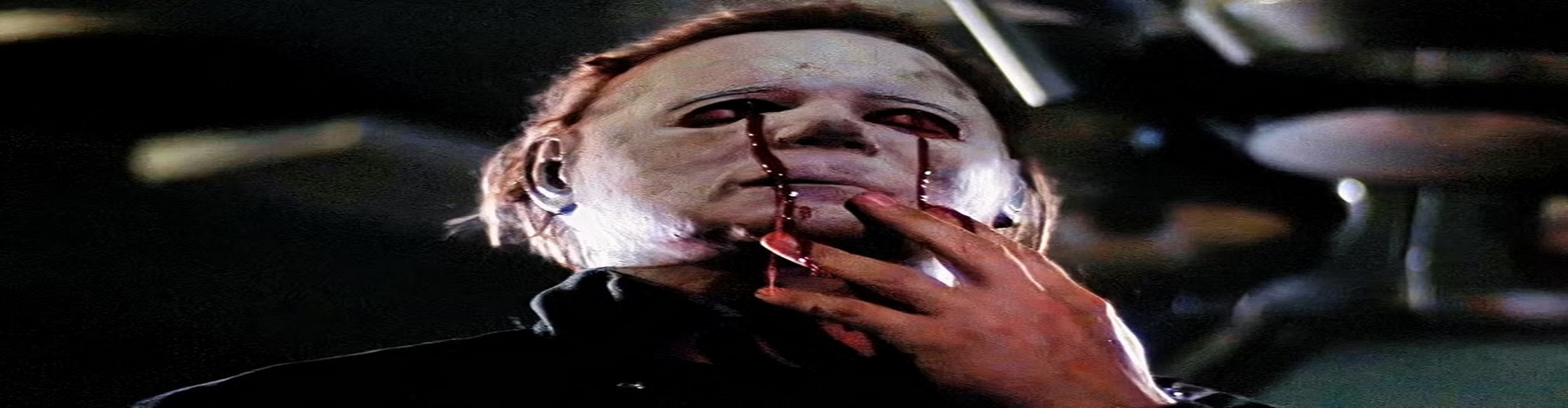
Blind boogeyman. Credit: Universal Pictures

The final moments of John Carpenter’s Halloween (1978) made for the perfect end to the story of Michael Myers, Laurie Strode, and Dr. Samuel Loomis. After Loomis fires six shots into Michael, sending him falling from the balcony of the Doyle house where Laurie was babysitting little Tommy, a lingering long shot shows Michael’s supposedly dead body laid out on the front lawn. Laurie says, “It was the Boogeyman”, to which Loomis replies, “As a matter of fact, it was.” When Loomis looks down, he sees that Michael has disappeared. While his initial reaction is one of shock, his expression shifts as he looks up, hardening into a look of expectation—as if he knew this would happen. The camera then transitions to a montage of locations Michael visited throughout the night, accompanied by the sound of his heavy breathing behind the mask, before closing on the Myers house. He is still out there, and evil could be anywhere.

The subtext represents the idea that no matter what we do, we cannot destroy evil; it inevitably returns. Michael is the embodiment of this concept—the personification of an un-killable malice—and his mask itself—The Shape—symbolises pure malevolence. Its design is subtly unsettling, projecting our own fears onto its features. This mimics how Loomis describes Michael: “…blank, pale, emotionless.” Ultimately, these elements reinforce a supernatural theme, framing Michael not just as a man, but also as an ominous force of nature. We genuinely believe this unstoppable killing machine, although born of this world, is no longer part of it.   

This ingenious, ambiguous ending has been set up from the outset. Over the course of the proceedings, Michael's psychiatrist, Loomis, in his deeply obsessive pursuit of him, constantly warns the other characters of the extreme danger Michael poses. Smith’s Grove officials and Haddonfield’s Sheriff Brackett believe none of it. He delivers highly memorable monologues about how Michael is pure evil and the devil incarnate. Loomis is strong in his conviction that Michael is something other than a man, which serves as a narrative device to help turn Michael into more than just another maniac killer on the loose. This is perfectly supplemented by young Tommy Doyle believing the Boogeyman is coming for him this Halloween night—and Michael realises his belief. 

While this climax was left open-ended to invite us to interpret rather than to serve as a gateway for a sequel, commercial reality soon took over. Because Halloween became the most successful independent film of its time—and because horror proved to be a massively profitable genre at the turn of the 1980s—Michael Myers was bound to return. Friday the 13th (1980), heavily inspired by Halloween, added explicit gore and other tropes to the established template, opening the ‘bloodgates’ for a deluge of low-budget imitators that slashed through the box office. With the slasher sub-genre now in full machete swing, it was time for The Shape to return and show how it was truly done. Fittingly, the sequel to the film that birthed an entire cinematic movement was released in 1981, the peak year of the first slasher cycle's saturation. But its return came with several caveats.

Laurie Strode (Jamie Lee Curtis) and Dr. Samuel Loomis (Donald Pleasence) face Michael Myers once again on the same terrifying night. Credit: Universal Pictures

I actually saw Halloween II for the first time before I had even seen the original. At some point in the 1990s, not long after I became a serious film and horror fan, a classmate lent me the sequel on an old videotape he had taken from his father’s collection. It was a bootleg copy, which his father must have owned since the movie's UK theatrical run. The BBFC 'X' certificate card appeared right before the start of this uncut version. This rating was replaced by the '18' certificate in 1982 when Halloween II hit the UK home video rental market on VHS and Betamax via MCA/Universal Home Video. For that release, 17 seconds were trimmed from Pamela Susan Shoop’s nudity and her character Nurse Karen Bailey’s subsequent murder—Michael Myers drowns and scalds her in a hospital hydrotherapy tub. This missing footage was finally restored for the 2002 DVD release. It is visually striking and harrowing imagery that has stayed with me ever since. The darkened grain of this bootleg copy, recorded on an old dirty VHS tape, only added to the film’s dark atmosphere. I loved it.

Halloween II opens with the sound of “Mr. Sandman” by The Chordettes. This cheerfully innocent song is turned into something extremely creepy. The track is highly significant, contrasting sharply with Michael Myers' stalking of Laurie Strode (Jamie Lee Curtis) while she is heavily sedated in Haddonfield Memorial Hospital. This plot device makes her more vulnerable—a woozy sitting duck to the present danger of the malevolent Michael, who bumps off the hospital staff one by one while working his way toward her as she drifts in and out of consciousness. Unfortunately, being stuck in bed gives Curtis little to do for the first hour. However, this is made up for in the thrilling final third as Michael pursues Laurie while she is doped up and nursing a fractured ankle from the events of the previous film.

When “Mr. Sandman” fades out, there is a recap of the original's climax. Then Loomis (Donald Pleasence, 1919–1995) goes down to investigate the disappearance of Michael, and a next-door neighbour comes out to see what all the commotion is about. Here, we are treated to some immensely quotable dialogue in an incredibly cool scene:

Neighbour: What’s going on out here?

Loomis: Call the police! Tell the sheriff I shot him!

Neighbour: Who?

Loomis: Tell him he’s still on the loose!

Neighbour: Is this some kind of joke? I’ve been trick-or-treated to death tonight.

Loomis: You don’t know what death is!

Loomis then runs off, and the scene segues smoothly into the title sequence accompanied by a version of John Carpenter’s iconic theme, which he co-composed with Alan Howarth. The familiar piano melody is upped in tempo and played on a synthesizer, backed by the ominous, heavy blasts of an organ. This heavily stylised, exhilarating, Gothic-infused variation stands as one of the most underrated compositions in cinematic horror history.

The first movie’s title sequence featured a jack-o'-lantern against a black backdrop—as the camera slowly zoomed in on its left eye, a hidden skull was revealed just as the candle inside dimmed and went out. In this sequel, the camera slowly moves in on the entirety of the jack-o'-lantern. As the candlelight inside begins to flicker, the pumpkin dramatically rips apart down the middle to reveal a skull's full visage. The camera then continues to close in on the right eye socket until it plunges completely inside. This is deeply chilling imagery.

Credit: Universal Pictures

As Halloween II takes place right after the previous events, set on the exact same night, this makes it more of a companion piece than a standard sequel. Because it functions as a direct continuation, its tagline promised “… More of the Night He Came Home.” To maintain continuity, director Rick Rosenthal is dedicated to carrying over the original’s specific stylistic traits.

In the opening post-title sequence, we see Michael Myers creep around the back alleys through his POV, much like the beginning of the last film.

He sees Loomis picked up by Sheriff Brackett (Charles Cyphers, 1939–2024) in his patrol car, as Loomis shouts his now-famous line, “I shot him six times!”

Michael then comes across the back of a house where the kitchen is situated. Peering through the kitchen window, he watches an elderly woman preparing a sandwich for her husband, who is asleep in an armchair in front of a TV in the living area. The camera then shifts away from this voyeurism, moving into the interior of the house as the woman walks away from the kitchen to see why her other half is not answering her. On their television, the Halloween horror movie marathon carried over from the original is playing. Instead of The Thing from Another World (1951), the channel is now showing Night of the Living Dead (1968). The camera then returns to Michael’s perspective as a breaking news bulletin airs on the TV, reporting the three murders committed in the Wallaces' house, where Laurie’s friend Annie was babysitting little Lindsey. Michael enters the house through the kitchen and picks up the knife the old woman was using to make the sandwich. This shot looks just like when the young Michael takes a butcher's knife from the kitchen drawer in the opening of the first film.

It is from here, though, that we start to see the distinct differences. Michael makes his way to a neighbouring house where a young woman is inside. This first killing—featuring a knife driven through her chest—delivers the first bit of blood seen since the very beginning of its predecessor, which depicted Michael’s stabbing of his older sister, Judith. This marks the first of eight graphically gruesome set-pieces.

This scene is also the start of the sequel’s problems. This was an unnecessary, gratuitous set-piece because it does not fit Michael Myers’ M.O.—he tends to only kill those directly in his way, and this young woman clearly was not. This sequence, like the other horrific sequenes, was completely absent from the original cut.

Michael Myers (Dick Warlock) means business. Credit: Universal Pictures

Rick Rosenthal wanted to make something closer to the spirit of John Carpenter’s original work, relying mostly on mood, deliberate pacing, suspense, and tension. However, when he delivered his rough cut, Carpenter knew it was not what audiences wanted to see in this new era of bloodletting "money shots". The production had to compete with explicit offerings released in the same year, such as My Bloody Valentine, Friday the 13th Part 2, The Burning, and The Prowler. The ultimate irony is that while the first Halloween spawned the slasher sub-genre, it was now out of place within it. Forced to deliver the gory goods, the producer, now acting as a director, shot this additional material at night behind Rosenthal’s back to give the movie the shocks it needed to draw its target audience.

John Carpenter made a couple of mistakes cutting his version that ruin the timeline. The placing of the aforementioned breaking TV news bulletin, reporting the dead bodies at the Wallaces’ house, is literally just minutes after Loomis shot Michael—meaning the discovery had not actually happened yet. Another continuity error Carpenter created was omitting the scene where Michael cuts the hospital’s power and the emergency generator starts up. This explains the building’s dark setting from the halfway mark onwards.

The TV version is much closer to Rick Rosenthal’s originally intended vision. It puts everything back in order—for instance, we hear the news report after the bodies are found in the Wallaces’ house. There are no gory kills, and this includes Michael leaving the young woman in the house alone. There is more character development. There is a lot more of the town of Haddonfield falling into panic due to the events of the last film—this backdrop of increasing community fear makes this sequel stand out from the slasher pack that usually exists in a vacuum.

But the worst offence John Carpenter committed was at the writing stage, with the sibling revelation that creates massive plot holes in the original. After watching Halloween II multiple times on that old dirty bootleg videotape, I obviously needed to see the first movie, so I bought a VHS copy with a crappy pan-and-scan transfer on the tacky, gold-covered 4Front Video budget imprint from PolyGram Video. Even then, when I was a know-nothing kid, it became abundantly clear that Michael Myers and Laurie Strode were not initially intended to be brother and sister.

Laurie gets away by the skin of her teeth. Credit: Universal Pictures

In Halloween, Laurie goes to the empty Myers house on the way to school to drop off the keys for her estate agent father. She is accompanied by Tommy Doyle, whom she meets along the way and is babysitting that night. Michael sees them from inside and fixates not just on Laurie, but on Tommy as well. While it is feasible that Michael sees a resemblance to his sister Judith in Laurie, and sees a reflection of his own boyhood self in Tommy, John Carpenter is actually establishing that even the most mundane daily routines in our lives can land us in mortal danger. This is frightening in itself.

When Annie shouts out something rude to Michael as he stalks Laurie from the stolen Smith’s Grove Sanitarium station wagon, he changes his focus to Annie for the next half-hour of the runtime, with the sole exception of stalking Laurie in her own backyard. At the start of the final third, after murdering Annie, Laurie’s other friend Lynda, and her boyfriend Bob at the Wallaces’ house where Annie was babysitting, Michael turns his attention to Laurie. However, this only happens when she leaves the Doyle house to walk over to the Wallaces’ house to investigate, following a phone conversation with Lynda in which Laurie hears her being strangled before the line goes dead.

Laurie eventually discovers Annie’s body laid out on a bed in front of Judith Myers’ tombstone. If Laurie and Michael are truly siblings, then why did he not reserve this specific spotlight for her? Instead, he chose one of Laurie’s friends who merely insulted him. Michael followed Annie to the Wallaces’ house to kill her for this reason alone. It does not sound like the behaviour of a psychopathic killer focused solely on murdering his remaining sister, especially when she is easily reachable just across the street. He knows she is over at the Doyle house, yet he does not once go over there during the entire night.

These are the acts of a deranged lunatic wanting to relive his past crime over and over again by using whoever crosses his path to serve his homicidal repetition. If Laurie had never gone over to the Wallaces’ house, she could well have been spared Michael’s knife attack, and he could have simply found another victim to stalk and murder on his homecoming night. 

One of the scariest elements of Halloween is the antagonist’s total lack of motivation—there is very little backstory and exposition given to Michael Myers. One Halloween night, a six-year-old boy from a middle-class suburban family decided, for no reason whatsoever, to stab his older sister to death. Fifteen years later, he awakens from a state of catatonia, escapes incarceration from a mental institution, and returns to his small hometown to relive his crime. By doing a simple everyday favour for her father on that fateful day, Laurie became just one of Michael’s arbitrary targets in his quest to rekindle that specific moment in his life, which remains his sole driving force. Laurie’s friends then come to his attention while he is stalking her, giving him the opportunity to relive his original crime repeatedly.

In Halloween II, when Michael bumps into a teenager carrying a boombox and hears the radio news report stating that Laurie has been taken to Haddonfield Memorial Hospital, this was already a perfectly good motivation: to finish the job by killing the one who got away. This fits Michael’s character flawlessly, so it would have been more than sufficient. He is simply pure evil—he kills because that is what he does. Doing away with this ambiguity by giving a concrete reason for his actions ultimately demystifies an enigmatic, malevolent entity.

Michael Myers digs the sound coming from this teen's boombox. Credit: Universal Pictures

Dick Warlock as Michael Myers moves much slower, and his body movements are far stiffer, than Nick Castle’s performance in the first film, making this killing machine more robotic. Yet Warlock is utterly convincing as a devil incarnate. The same original William Shatner prop was used for the mask, but it had visibly deteriorated over time.

Returning cinematographer Dean Cundey shoots Michael in a way that brings him right out into the light, employing none of the previous camera trickery where he shot him on the fringes of the frame, existing as a visual enigma where we question whether Laurie is actually seeing him. Because we already know from that movie's conclusion that Michael must be something other than human and is near-indestructible, the same aesthetic need not apply here.

It is incredibly strange that the hospital is nearly empty. There is only a handful of staff and there are zero patients except for Laurie, even though there is inexplicably a nursery full of newborn babies. Every time I watch Halloween II, this logical flaw bugs me, but it serves a distinct artistic purpose. While this setting is not as visually rewarding as the last film’s wide-open suburban spaces, this standard, remote setting for a slasher provides an overwhelming feeling of isolation. The eerie confinements of the building’s dark hallways and rooms in this perpetual night setting, long shots of Michael Myers making his way through the corridors, and the security cameras capturing his movements on the monitors all make for a claustrophobic and creepy atmosphere.

You wouldn't want to bump into him alone in a dark hallway. Credit: Universal Pictures

Inferior to the original, yes, but taken on its own merits, Halloween II stands out as an extremely effective slasher horror from the sub-genre’s early 1980s Golden Age, a time when a new entry opened in cinemas almost every weekend. Having watched this sequel first, I credit its rock-solid, workmanlike approach and genuinely great moments for cementing my lifelong horror fandom. While my nostalgia undoubtedly plays a significant part here, the fact that I can acknowledge its objective flaws, while still finding it highly entertaining, makes for a valid argument: this is a good, even if not quite as good, follow-up to a masterclass piece of filmmaking.

© 2026 Dave J. Wilson. All rights reserved.


Credit: Universal Pictures

Read More →

October 20, 2026

SICK BAGS AND BRAINS: LOOKING INTO ‘NIGHTMARES IN A DAMAGED BRAIN’ (1981) AT 45

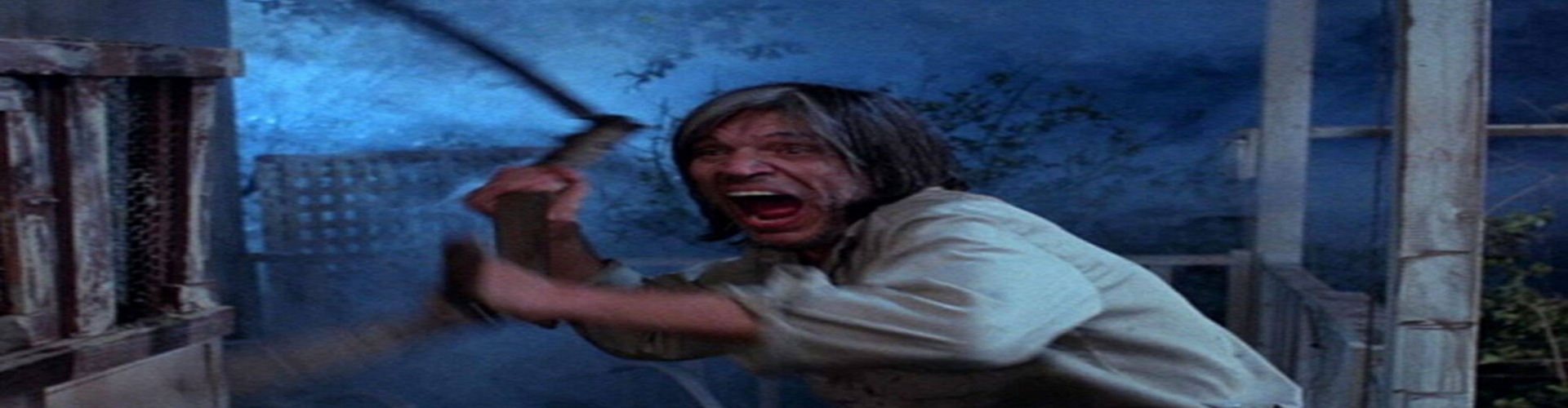
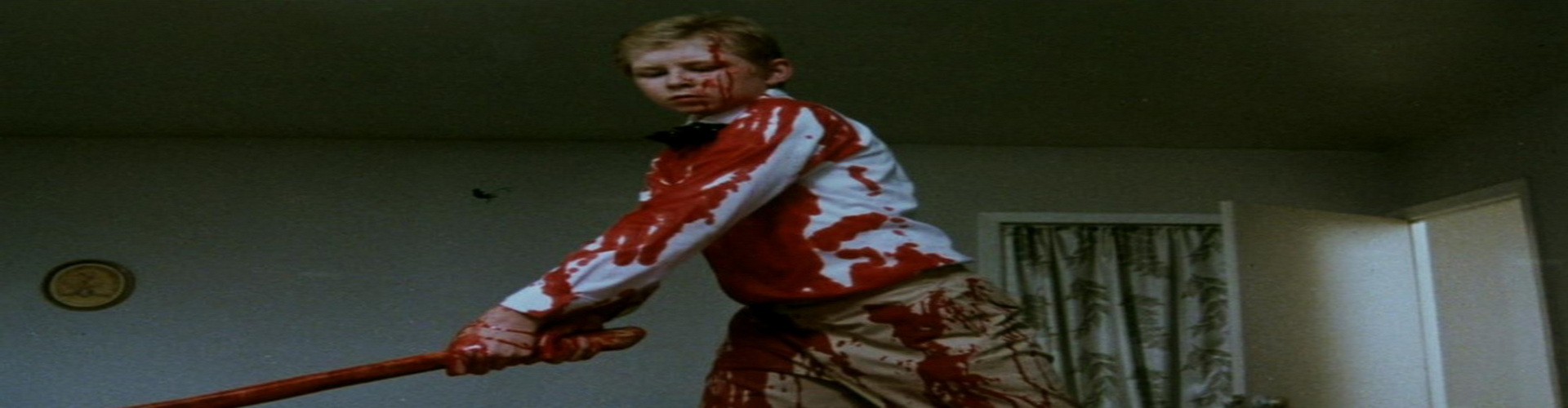
This kid has an axe to grind. Credit: Severin Films 

Generically titled Nightmare in the United States, this slasher film is better known to horror enthusiasts in the United Kingdom by its enticing title, Nightmares in a Damaged Brain. Released in 1981—the peak saturation year of the first slasher cycle—it stands out as an extremely savage, scuzzy, sleazy, and unconventional entry.

Writer/director Romano Scavolini wanted to create something more psychologically disturbing than the teenage stalk and slash flicks of the era inspired by John Carpenter’s Halloween (1978) and Sean S. Cunningham’s Friday the 13th (1980). Instead, it is much closer tonally to Joseph Ellison’s Don’t Go in the House (1979) and William Lustig’s Maniac (1980)—gritty, defeatist, harrowing, and drenched in a cold, ugly atmosphere. This is true structurally as well, at least for the first half, as Nightmares in a Damaged Brain—steeped in the seriousness of its grim subject matter—is viewed entirely through the eyes of its mentally ill protagonist. The film captures a transitional period in the evolution of horror cinema as it moved from the nihilistic social realism and uncompromising, stark brutality of the 1970s to the popcorn-munching thrills of the 1980s teen slasher. However, it is nowhere near as accomplished as Don’t Go in the House or Maniac.

Scavolini employs a subjective narrative for the first half of the film, framing it as a case study of mental illness seen through the eyes of killer George Tatum (Baird Stafford). We are plunged into his psyche through images representing his inner thoughts, dreams, and a recurring, haunting, and deeply disturbing childhood trauma flashback. While this extremely violent and bloody imagery ultimately accounts for his psychotic behaviour, amnesia prevents him from fully remembering the event. He also suffers from epileptic seizures during which he rabidly foams at the mouth. And we experience the horrors of his murders through his direct point of view.

The writer/director took his inspiration from a newspaper article he had read about CIA experiments on psychiatric patients—specifically schizophrenics—using powerful drugs to alter their behaviour. George is committed to a psychiatric hospital after sexually mutilating and murdering an entire family. He is treated for insanity with extensive doses of hypnotic drugs that are force-fed to him. The doctors rather hastily believe they have made a breakthrough with their secret experiments, as George seems cured on the surface. Unwisely, the psychiatrist in charge releases him back into the world, thinking George’s psychosis has ended. However, the medication only suppressed his murderous desires; he soon regresses, and his homicidal urges completely consume him. He goes on an impulsive murder spree, slicing and dicing complete strangers as the gruesome memories of his childhood grow increasingly intense.

Baird Stafford does a decent job of drawing sympathy for his severely disturbed character, much like Dan Grimaldi’s Donald Kohler in Don’t Go in the House and Joe Spinell’s Frank Zito in Maniac, despite the poor material he had to work with. He gives a tragic portrayal of a reluctant killer who shows genuine remorse to his victims and is visibly distressed that he cannot stop himself.

You all right there, George? Credit: Severin Films

The second half of the film switches to an unrestricted narrative, focusing on George’s return home to Florida, the origin of his childhood trauma. We are then subjected to some of the most annoyingly obnoxious characters ever committed to celluloid as George begins to stalk a single-parent family he has targeted due to a personal connection. The mother, Susan (Sharon Smith), has to put up with the youngest of her three children, C.J. (C.J. Cook), turning into a psycho himself. The insufferable Susan spends most of her time complaining about everything, yelling at her children, and sleeping with her bearded boyfriend, Bob (Mik Cribben). Rather than being creepy, C.J. comes off as a little pest, playing cruel practical jokes and generally being a whiny brat. Meanwhile, George lurks in the background, makes obscene phone calls, and creeps around the family’s house. Because these characters are so unsympathetic, it completely derails the suspense and tension the director was aiming for—I actually wanted to see George off the lot of them.

Just as egregious is an utterly pointless subplot that goes nowhere. This involves George’s fool of a psychiatrist and a clichéd, overcoat-wearing, cigar-smoking man in charge of the experiments, arguing about whether they should have released George. They try to track him down but get nowhere near finding him, resulting in a total lack of narrative logic.

Romano Scavolini completed his screenplay in just two weeks to capitalize on the new slasher horror craze (and it shows) while visiting friends in Cocoa Beach, Florida, where the second half of the film was also shot. Additional photography for the first half took place on New York City’s infamous sleazepit, 42nd Street, where an independent exploitation picture such as this would have routinely played in the grindhouse theatres.

Janet Maslin, film critic for The New York Times from 1977 to 1999, perfectly summed up Nightmares in a Damaged Brain in a single sentence in her review published on the day of the film’s release, 23 October 1981: “Nightmare is the perfunctory work of Romano Scavolini, a writer-director whose best idea here is to repeat the same gory flashback footage over and over again.” This repetition continues all the way through to the finale, when we finally sees George’s traumatic childhood flashback in full detail. It is a blood-drenched depiction of his brutal double slaying of his mother and father with a felling axe while they were engaged in a sadomasochistic activity in their bedroom—an event the killer was unable to comprehend at such a young age.

Advice from one of the best in the industry. Credit: Severin Films

SFX maestro Tom Savini is credited as the special effects make-up artist responsible for this visceral sequence, but he actually only served as a consultant to the practical effects work of Daryll Ferrucci, Ed French, Johane Hansen, and Robin Stevens. The theatrical posters even featured the tagline: “IF YOU WERE TERRIFIED BY ‘DAWN OF THE DEAD’ & ‘FRIDAY THE 13TH’ YOU MUST SEE NIGHTMARE!”—the two movies Savini had made his name on. Due to this blatant use of his horror fame to promote the film, Savini successfully sued the producers to have his name removed from the original promotional posters, though his name still appears in the film's credits.

The long-defunct 21st Century Distribution Corporation released this low-budget, independent American/Italian production. The uncut version was given a limited run from 23 October 1981 in 117 New York theatres and was branded with an X rating (which became the NC-17 in 1990) by the MPAA. It was subsequently reissued in a heavily censored, R-rated cut that omitted over three minutes of mostly explicit violence. These cuts include close-ups of a character's throat being slit with a knife, the resulting depiction of injury, and several stabs to the stomach, as well as close-ups of a hammer claw being utilized in an assault, intercut with shots of a child forced to watch.

Nightmares in a Damaged Brain remains notorious in the UK as one of the most controversial “video nasties” of all. The BBFC heavily cut it for its theatrical release in April 1982, giving it an X certificate (replaced by the 18 certificate later that year). David Hamilton Grant (1939–1991), the head of its UK distributor, World of Video 2000, came up with a novel marketing campaign: handing out sick bags to patrons and holding foyer competitions where viewers had to guess the weight of a brain model floating in a jar of liquid. Grant simultaneously released an unauthorized version on Betamax and VHS containing extra violent footage. This drew the attention of the Director of Public Prosecutions. The film ended up on the final list of 39 successfully prosecuted films banned under the 1984 Video Recordings Act. Grant was tried at the Old Bailey under the Obscene Publications Act and sentenced to 18 months in prison for adding just one-minute of footage back into a film that had already been passed for release.

Ultimately, the history of the controversies surrounding Nightmares in a Damaged Brain is what earned the film its undeserved cult following—it is far more interesting than what is on screen. It is a dull, lifeless, hastily assembled, and opportunistic cash grab masquerading as a serious psychological piece. When a film's best feature is its startling imagery of carnage—crafted purely to appeal to the exploitation market—it becomes clear that this is bottom-of-the-barrel filmmaking.

© 2026 Dave J. Wilson. All rights reserved.


Credit: Severin Films

Read More →

October 13, 2026

THE LEGEND OF CRYSTAL LAKE TRULY BEGINS: 'FRIDAY THE 13TH PART 2' (1981) - A CUT ABOVE AT 45

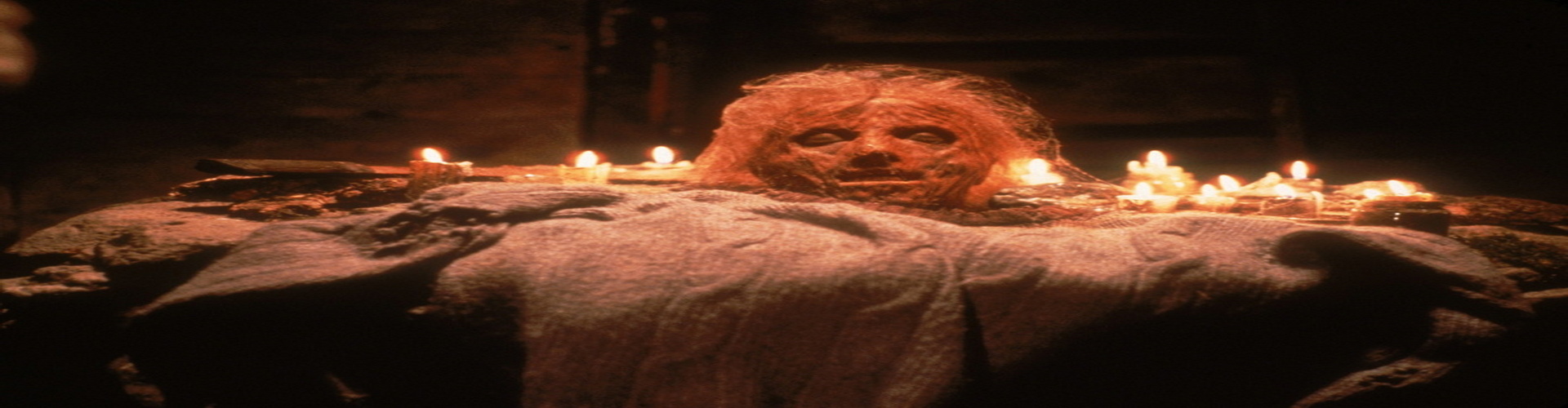
We see "... a grotesque shrine centred around [Jason's] mother’s decomposing severed head." Credit: Paramount Pictures

The cold open of Friday the 13th Part 2 does two things perfectly: it sets up the creepiest instalment in the series and establishes backstory that becomes central to franchise lore, as later recounted in the campfire sequence at the end of the first act.

Fading in on an establishing shot of a rain-drenched neighbourhood street at night, we see only one house with a light on in an upstairs bedroom, situated in the middle of the street's dead end, and we hear the eerie sound of a small boy singing "Itsy Bitsy Spider." When the boy’s mother calls him inside, the legs of a stranger walk toward the house, and it triggers returning composer Harry Manfredini’s iconic motif cue sting, which alerts us to the killer's presence - "ki ki ki, ma ma ma.”

Inside the house, we are reintroduced to sole survivor Alice Hardy (Adrienne King), who is having a nightmare in the illuminated bedroom. Director Steve Miner integrates a montage of clips into her nightmare to recap the climax of the first film detailing Alice’s brutal confrontation with, and eventual decapitation of, Mrs. Voorhees (Betsy Palmer, 1926 - 2015). Miner highlights specific moments to emphasize Mrs. Voorhees’ son, Jason. She explains her motivation to Alice for murdering her fellow camp counsellors: the negligence of the previous counsellors while having sex caused Jason to drown in 1957. We see imagery of his supposed drowning, alongside the legendary final jump-scare dream sequence where Jason rises from the lake and pulls Alice under. Instead of dumping a clunky recap at the beginning of the sequel before it continues this story, Miner smartly frames the summary as a character's nightmare, in a case of narrative efficiency that seamlessly continues it.

When Alice wakes up, the camera follows her as she does things around the house. We are given natural exposition when she answers a phone call from her mother, learning that Alice is spending time alone to cope with the trauma of that horrifying night. She then heads to the kitchen to look at her sketches, a character trait carried over from the previous movie. When the phone rings again, Alice answers, assuming it is her mother, but the caller hangs up - leaving both her and us uneasy. Hearing dustbins crashing to the ground outside the open kitchen window, she grabs the nearest sharp object - a screwdriver lying on the kitchen worktop - and approaches the window to investigate. Suddenly, a cat leaps through the frame and onto the kitchen table. This jump scare is incredibly effective, thanks to the dark atmosphere, tight pacing, and creeping dread built up beforehand. Like Alice, we breathe a sigh of relief.

Alice places the screwdriver on the nearby stove and sets the kettle to boil. However, when she opens the refrigerator door to get food for the cat, she is confronted by the ghastly sight of Mrs. Voorhees’ decomposing severed head and screams in terror. The stranger we saw creeps up behind her and drives the screwdriver into the side of her face. The camera goes to the cat meowing up at the intruder, who calmly removes the whistling kettle from the hob - a haunting, chilling image before the title card crashes onto the screen.

This prologue easily trumps the opening of the first film. It delivers a far more unsettling atmosphere, skilful suspense, and a palpable sense of anxiety, culminating in a much more impactful final blow that perfectly sets the sequel's grisly tone.

Much of Friday the 13th Part 2 focuses on establishing the mythos of Jason Voorhees. The tragedy of the original story, combined with the disappearance of its sole survivor two months later, who claimed to have seen him, forms the campfire legend that transforms Jason from a tragic backstory into the series’ main antagonist.

Alice (Adrienne King) finds a nasty surprise in her refrigerator. Credit: Paramount Pictures 

Five years later (placing the events in 1984), we are introduced to a new set of characters - or rather, slasher fodder for the machete-wielding maniac. A group of attractive teenagers arrives at a camp counsellor-training centre named Packanack Lodge. It is situated across the lake from the now-condemned Camp Crystal Lake, and crucially close to the hidden location of Jason’s makeshift, grotty little shack. While this predictable premise is a standard rinse-and-repeat affair, Friday the 13th Part 2 ultimately has a bit more depth to offer than its predecessor does.

Packanack Lodge is run by the young adult couple Paul Holt (John Furey) and Ginny Field (Amy Steel). Paul is a strong-willed leader with a dry sense of humour, while Ginny is arguably the best final girl of the entire franchise. Although she embodies the intelligent and resourceful archetype of this slasher trope, she possesses a unique edge that makes her stand out: her background in child psychology. Studying the subject at university, her understanding of a childlike mind gives her a distinct psychological advantage over Jason. As she sits at a local bar with Paul and the group jokester, Ted (Stuart Charno) - who holds the rare distinction of surviving by simply staying out late at bars - Ginny articulates a theory that the Jason legend might actually be true. He is a backwoods hermit, and a psychotic, deformed man-child, who witnessed the brutal murder of his mother, and is now crying out for her resurrection.

While there are significantly more teenage counsellors this time around, the narrative smartly focuses on a core group destined to become Jason’s victims. During a dinner scene, Paul announces one last night out on the town. As the majority of the group leaves for the bar, the camera pans across the counsellors as the remaining core group discuss their reasons for staying behind. Isolating these select characters creates far more room for taut suspense, and because these victims are more fleshed out, we have grown to know and like them.

Mark (Tom McBride, 1952 - 1995) is the most endearing of the group. Though he is wheelchair-bound, he maintains a remarkably positive outlook on life and a fierce determination to walk again. He forms the beginnings of a sweet romance with nice girl Vickie (Lauren-Marie Taylor), making their grim fates all the more tragic. Mark’s death stands out as one of the most mean-spirited kills in the entire Friday the 13th franchise due to its vicious lack of bias. Imagine a maniac driving a machete into the face of a beloved figure like the late Christopher Reeve - it evokes a visceral, sickening feeling - and that is exactly what this scene achieves. Vickie’s subsequent murder, in which we see Jason wearing his burlap sack mask for the first time, only amplifies the sadness, because we know the beautiful potential of what she and Mark were starting to build together.

Mark (Tom McBride) and Vickie (Lauren-Marie Taylor) could have had a beautiful thing together. Credit: Paramount Pictures

The other highly memorable set piece is the gruesome double impalement of Jeff (Bill Randolph) and Sandra (Marta Kober) mid-coitus. The slasher sub-genre’s intrinsic link between sex and death is made explicitly clear here. This sequence is taken right out of Mario Bava’s 1971 giallo/slasher prototype, Reazione a Catena/Chain Reaction (A Bay of Blood, Twitch of the Death Nerve). Bava’s film heavily influenced the original film's secluded setting as well, and even Marcie’s axe-to-the-face murder mirrors the billhook execution of Bobby in the Italian picture. While its director Sean S. Cunningham and Part 2 director Steve Miner always maintained they had never seen Bava’s work prior to production, the influence came from behind the scenes. Philip Scuderi, an uncredited investor who wielded significant influence over the franchise during its Paramount years, was a massive fan of Reazione a Catena, and had even screened it throughout his Boston-based cinema chain, Esquire Theatres.

It was Philip Scuderi’s idea for the killer in Part 2 to be Jason Voorhees. Steve Miner - who had worked on the first movie as an associate producer, assistant director, and unit production manager - fully believed in the concept. Scuderi had previously hired screenwriter Ron Kurz (1940 - 2020) to do uncredited rewrites on the original, and brought him back to pen the sequel. Kurz completely transformed how the previous film’s ending was perceived by radically retconning the franchise's mythology.

In this new context, Jason rising from the lake remains Alice’s dream sequence, but it now serves as an ominous foreshadowing of her murder in vengeance for Alice killing his mother in self-defence. Kurz never bothers to explain how Jason survived his childhood drowning, or why he never tried to contact his mother. However, a feasible theory is that after surviving, and as he was never found, Jason chose to withdraw from the world to live a lonely existence as a backwoods hermit. Knowing he could never function normally in a society that viewed him as a freak outsider, he isolated himself. Mocked, shunned, and ignored by other children - and neglected by the copulating camp counsellors who nearly caused his death - he likely did not want to be a burden to his mother. Ironically, her belief that her son was dead carried catastrophic repercussions, as her grief fuelled the severe psychosis that led her to murder nine innocent people. Having witnessed her death, Jason internalized her trauma and carried on her bloody work for his own vengeance - punishing the world that had wronged them both. He inherited her fatal compulsion that sex equals death, murdering the horny teenagers entering his woods in a vicious cycle where violence begets violence.

Paul’s campfire tale to spook his trainees wonderfully pieces all of this backstory together. Yet, Paul dismisses the legend as a mere campfire myth. It is all part of a planned prank: just as he finishes his story, a man with a spear leaps out and terrifies the group, only to reveal to be Ted wearing a mask. Paul reassures the teenagers that Jason is dead and strictly declares Camp Crystal Lake off-limits. By mocking and ignoring the genuine horror of the Jason legend, Paul and Ted unknowingly portend the teenagers’ tragic fates.

Paul’s campfire tale about the terrifying legend of Jason Voorhees spooks his trainee councellors. Credit: Paramount Pictures 

Jason’s choice of attire in Part 2 - wearing a simple burlap sack with a single eyehole - feels incredibly lazy and severely lacking in originality. It stands as a blatant aesthetic rip-off of the Phantom Killer’s iconic look in the 1976 proto-slasher, The Town That Dreaded Sundown. Thankfully, we all know this would not last.

During the intense, climatic confrontation between Ginny and Jason, the true significance of her background in child psychology becomes clear. Trapped inside Jason’s squalid shack, Ginny discovers a grotesque shrine centred around his mother’s decomposing severed head. As Jason furiously hacks through the door with a pickaxe, Ginny deduces his identity and psychological tether to the relic. In a desperate, brilliant move, she slips into the filthy jumper Mrs. Voorhees wore when she died, and conceals a machete behind her back. When Jason finally breaks through, Ginny manipulates his fractured psyche by posing as his deceased mother. We see the spectral imagery of Mrs. Voorhees speaking through Ginny, highlighting her tactical advantage, and splendidly illustrates Jason's regression into a vulnerable, childlike state.

The final jump scare mirrors the execution of the first film's ending, utilizing a calming, melodic score to lull us into a false sense of security. The peace is abruptly shattered when Jason - his deformed visage fully exposed, and the machete still embedded in his shoulder from Ginny’s earlier strike - crashes through a cabin window to grab her.

When the film cuts back to the shack for its final shot, the camera slowly zooms in on Mrs. Voorhees’ decomposing head, holding on a grim freeze-frame for a last lingering look at the matriarch, all while accompanied by Harry Manfredini’s uncanny music. It remains one of the most tremendously macabre final images in slasher horror history.

With her background in child psychology, Ginny (Amy Steel) ".... manipulates [Jason's] fractured psyche by posing as his deceased mother." Credit: Paramount Pictures

The original Friday the 13th was always intended as a one-and-done cash-in on Halloween (1978) - John Carpenter’s masterclass template for the slasher sub-genre. Part 2 is where the franchise truly begins, as most of its definitive chess pieces are being put into play. There is even the first full-frontal female nudity (courtesy of Kirsten Baker as Terry). It stands as a vastly superior film to its predecessor: better written, better directed, and better acted. The pacing is much livelier, the characterizations of these sympathetic young people have far more meat on their bones, and they are portrayed by a bright, energetic cast. Amy Steel’s Ginny Field ranks among the very best final girls in slasher horror. Friday the 13th Part 2 is a quintessential series entry and one of the better examples of the slasher film during its 1981 peak year of saturation - the pinnacle of the first cycle. From here, the formula merely required a minor tweak: a more physically intimidating, hulking brute of a Jason Voorhees wearing a far better, more iconic mask.

Note: In the wake of the original film's success, the MPA (then the MPAA) began cracking down heavily on slasher horror due to an avalanche of complaints regarding uncensored violence. Consequently, subsequent sequels and standalone slashers were severely neutered, noticeably diminishing their visceral power. Much of SFX make-up artist Carl Fullerton’s work on Friday the 13th Part 2 ended up on the cutting room floor. Fortunately, this fabled, long-lost footage was eventually recovered from his personal VHS tape, and was fully preserved as a bonus feature on the Scream Factory Deluxe Blu-ray Box Set.

© 2026 Dave J. Wilson. All rights reserved.


Credit: Paramount Pictures

Read More →