
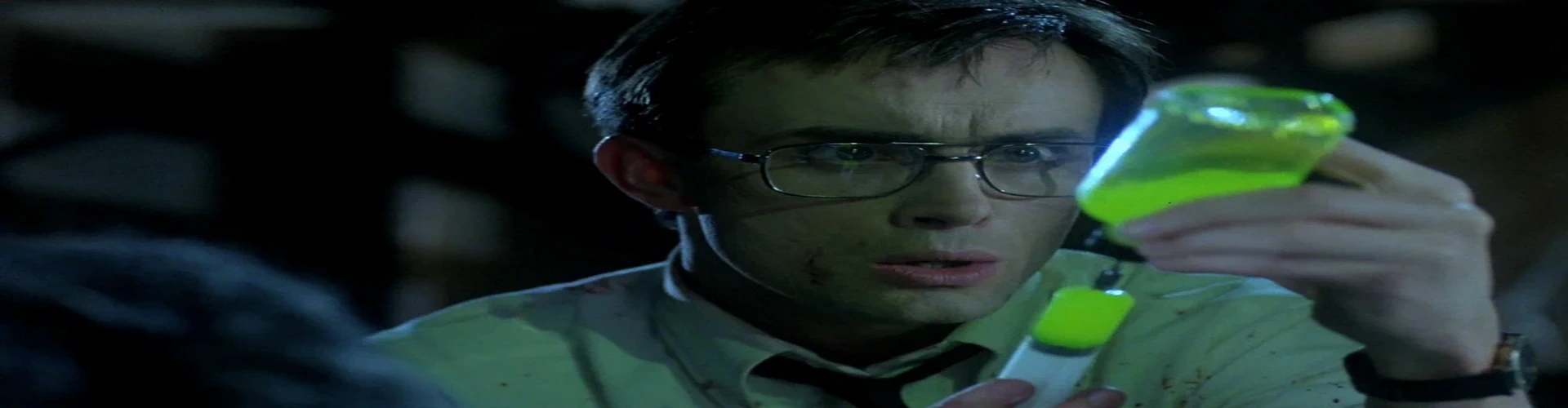
 |
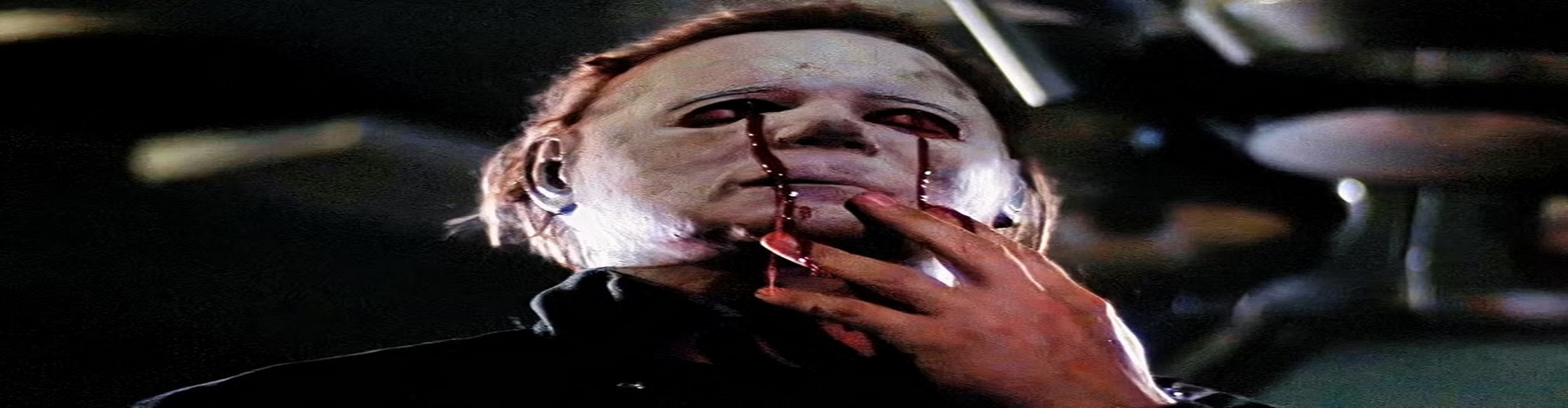
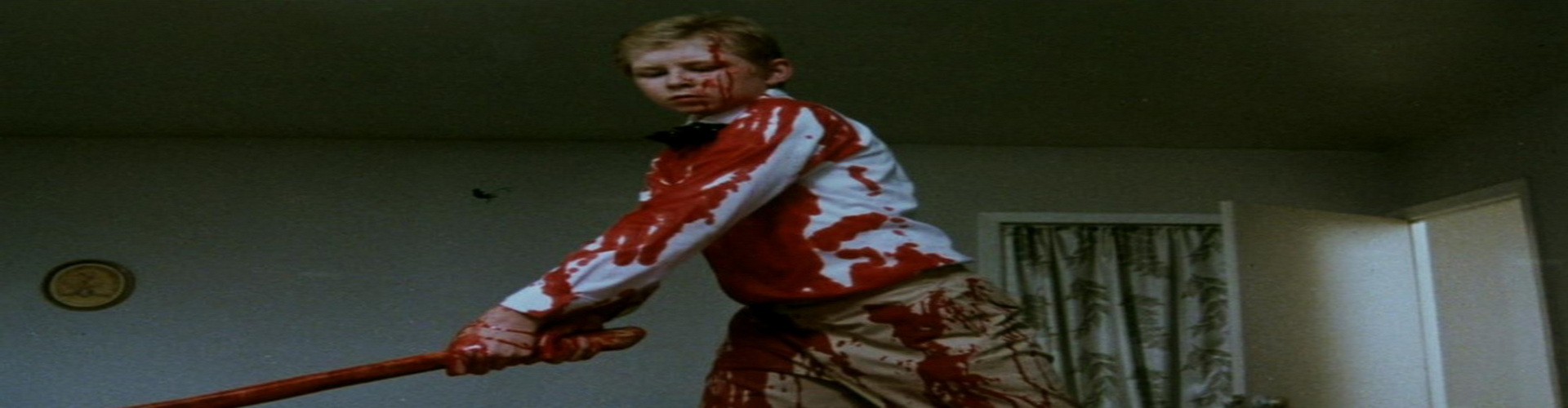
| This kid has an axe to grind. Credit: Severin Films |
Generically titled
Nightmare in the United States, this
slasher film is better known to horror enthusiasts in the United Kingdom by its
enticing title, Nightmares in a Damaged
Brain. Released in 1981—the peak saturation year of the first slasher
cycle—it stands out as an extremely savage, scuzzy, sleazy, and unconventional
entry.
Writer/director Romano Scavolini wanted to create something more psychologically disturbing than the teenage stalk and slash flicks of the era inspired by John Carpenter’s Halloween (1978) and Sean S. Cunningham’s Friday the 13th (1980). Instead, it is much closer tonally to Joseph Ellison’s Don’t Go in the House (1979) and William Lustig’s Maniac (1980)—gritty, defeatist, harrowing, and drenched in a cold, ugly atmosphere. This is true structurally as well, at least for the first half, as Nightmares in a Damaged Brain—steeped in the seriousness of its grim subject matter—is viewed entirely through the eyes of its mentally ill protagonist. The film captures a transitional period in the evolution of horror cinema as it moved from the nihilistic social realism and uncompromising, stark brutality of the 1970s to the popcorn-munching thrills of the 1980s teen slasher. However, it is nowhere near as accomplished as Don’t Go in the House or Maniac.
Scavolini employs a subjective narrative for the first half of the film, framing it as a case study of mental illness seen through the eyes of killer George Tatum (Baird Stafford). We are plunged into his psyche through images representing his inner thoughts, dreams, and a recurring, haunting, and deeply disturbing childhood trauma flashback. While this extremely violent and bloody imagery ultimately accounts for his psychotic behaviour, amnesia prevents him from fully remembering the event. He also suffers from epileptic seizures during which he rabidly foams at the mouth. And we experience the horrors of his murders through his direct point of view.
The writer/director took his inspiration from a newspaper article he had read about CIA experiments on psychiatric patients—specifically schizophrenics—using powerful drugs to alter their behaviour. George is committed to a psychiatric hospital after sexually mutilating and murdering an entire family. He is treated for insanity with extensive doses of hypnotic drugs that are force-fed to him. The doctors rather hastily believe they have made a breakthrough with their secret experiments, as George seems cured on the surface. Unwisely, the psychiatrist in charge releases him back into the world, thinking George’s psychosis has ended. However, the medication only suppressed his murderous desires; he soon regresses, and his homicidal urges completely consume him. He goes on an impulsive murder spree, slicing and dicing complete strangers as the gruesome memories of his childhood grow increasingly intense.
Baird Stafford does a decent job of drawing sympathy for his severely disturbed character, much like Dan Grimaldi’s Donald Kohler in Don’t Go in the House and Joe Spinell’s Frank Zito in Maniac, despite the poor material he had to work with. He gives a tragic portrayal of a reluctant killer who shows genuine remorse to his victims and is visibly distressed that he cannot stop himself.
 |
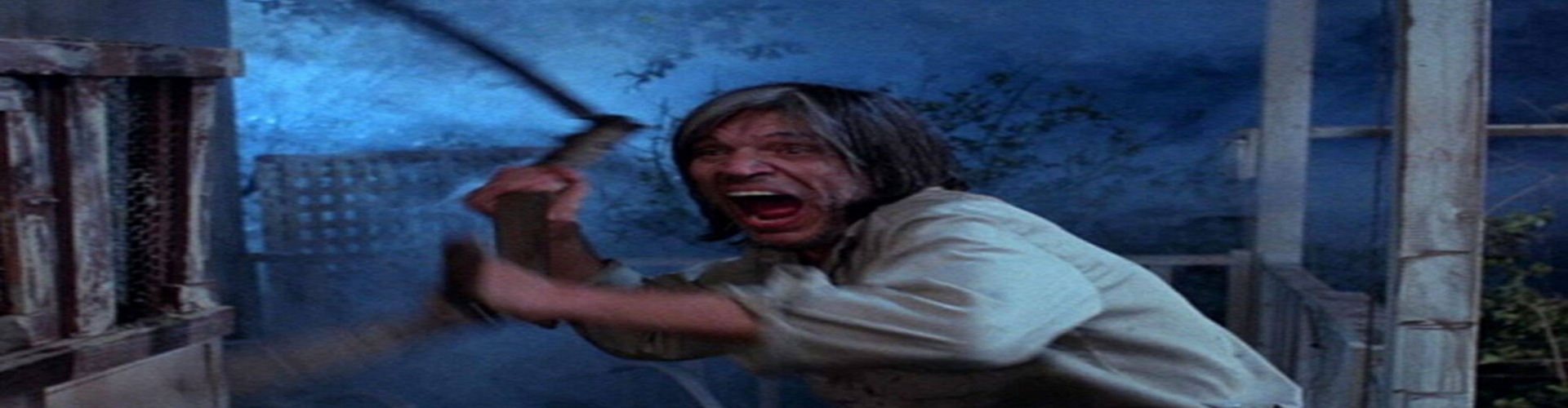
| You all right there, George? Credit: Severin Films |
The second half of the film switches to an unrestricted narrative, focusing on George’s return home to Florida, the origin of his childhood trauma. We are then subjected to some of the most annoyingly obnoxious characters ever committed to celluloid as George begins to stalk a single-parent family he has targeted due to a personal connection. The mother, Susan (Sharon Smith), has to put up with the youngest of her three children, C.J. (C.J. Cook), turning into a psycho himself. The insufferable Susan spends most of her time complaining about everything, yelling at her children, and sleeping with her bearded boyfriend, Bob (Mik Cribben). Rather than being creepy, C.J. comes off as a little pest, playing cruel practical jokes and generally being a whiny brat. Meanwhile, George lurks in the background, makes obscene phone calls, and creeps around the family’s house. Because these characters are so unsympathetic, it completely derails the suspense and tension the director was aiming for—I actually wanted to see George off the lot of them.
Just as egregious is an utterly pointless subplot that goes nowhere. This involves George’s fool of a psychiatrist and a clichéd, overcoat-wearing, cigar-smoking man in charge of the experiments, arguing about whether they should have released George. They try to track him down but get nowhere near finding him, resulting in a total lack of narrative logic.
Romano Scavolini completed his screenplay in just two weeks to capitalize on the new slasher horror craze (and it shows) while visiting friends in Cocoa Beach, Florida, where the second half of the film was also shot. Additional photography for the first half took place on New York City’s infamous sleazepit, 42nd Street, where an independent exploitation picture such as this would have routinely played in the grindhouse theatres.
Janet Maslin, film critic for The New York Times from 1977 to 1999, perfectly summed up Nightmares in a Damaged Brain in a single sentence in her review published on the day of the film’s release, 23 October 1981: “Nightmare is the perfunctory work of Romano Scavolini, a writer-director whose best idea here is to repeat the same gory flashback footage over and over again.” This repetition continues all the way through to the finale, when we finally sees George’s traumatic childhood flashback in full detail. It is a blood-drenched depiction of his brutal double slaying of his mother and father with a felling axe while they were engaged in a sadomasochistic activity in their bedroom—an event the killer was unable to comprehend at such a young age.
 |
| Advice from one of the best in the industry. Credit: Severin Films |
SFX maestro Tom Savini is credited as the special effects make-up artist responsible for this visceral sequence, but he actually only served as a consultant to the practical effects work of Daryll Ferrucci, Ed French, Johane Hansen, and Robin Stevens. The theatrical posters even featured the tagline: “IF YOU WERE TERRIFIED BY ‘DAWN OF THE DEAD’ & ‘FRIDAY THE 13TH’ YOU MUST SEE NIGHTMARE!”—the two movies Savini had made his name on. Due to this blatant use of his horror fame to promote the film, Savini successfully sued the producers to have his name removed from the original promotional posters, though his name still appears in the film's credits.
The long-defunct 21st Century Distribution Corporation released this low-budget, independent American/Italian production. The uncut version was given a limited run from 23 October 1981 in 117 New York theatres and was branded with an X rating (which became the NC-17 in 1990) by the MPAA. It was subsequently reissued in a heavily censored, R-rated cut that omitted over three minutes of mostly explicit violence. These cuts include close-ups of a character's throat being slit with a knife, the resulting depiction of injury, and several stabs to the stomach, as well as close-ups of a hammer claw being utilized in an assault, intercut with shots of a child forced to watch.
Nightmares in a Damaged Brain remains notorious in the UK as one of the most controversial “video nasties” of all. The BBFC heavily cut it for its theatrical release in April 1982, giving it an X certificate (replaced by the 18 certificate later that year). David Hamilton Grant (1939–1991), the head of its UK distributor, World of Video 2000, came up with a novel marketing campaign: handing out sick bags to patrons and holding foyer competitions where viewers had to guess the weight of a brain model floating in a jar of liquid. Grant simultaneously released an unauthorized version on Betamax and VHS containing extra violent footage. This drew the attention of the Director of Public Prosecutions. The film ended up on the final list of 39 successfully prosecuted films banned under the 1984 Video Recordings Act. Grant was tried at the Old Bailey under the Obscene Publications Act and sentenced to 18 months in prison for adding just one-minute of footage back into a film that had already been passed for release.
Ultimately, the history of the controversies surrounding Nightmares in a Damaged Brain is what earned the film its undeserved cult following—it is far more interesting than what is on screen. It is a dull, lifeless, hastily assembled, and opportunistic cash grab masquerading as a serious psychological piece. When a film's best feature is its startling imagery of carnage—crafted purely to appeal to the exploitation market—it becomes clear that this is bottom-of-the-barrel filmmaking.
© 2026 Dave J. Wilson. All rights reserved.


