
 |
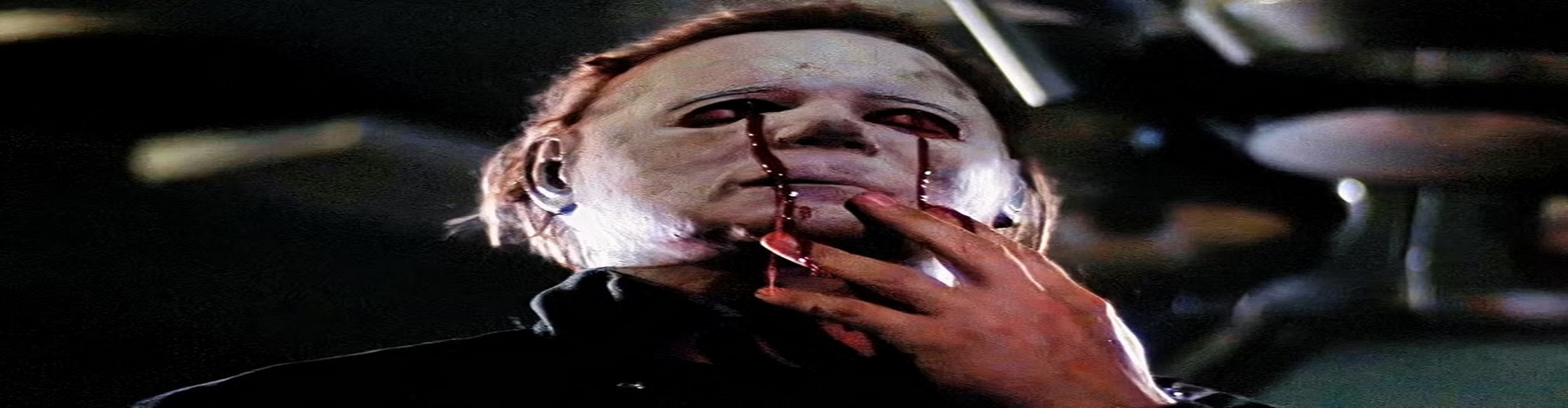
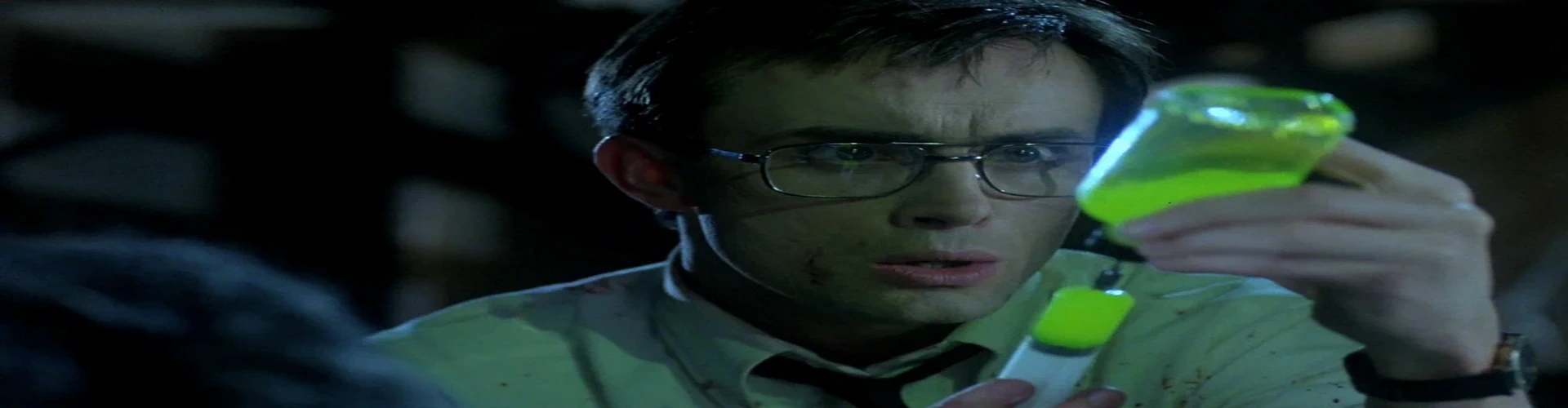
| "Caleb/Lester’s origin of his madness, and hatred of women, stems from a childhood trauma related to his mother." |
Exploitation filmmaker Don Jones (1938 - 2021) is
best known in horror circles for his debut in the genre as writer/director. The
sleazy and haunting Schoolgirls in Chains (1973) is a riff on Alfred
Hitchcock’s psychological horror masterpiece, Psycho (1960). It tells
the shocking tale of a pair of deranged brothers who are seemingly under the
influence of their domineering and crazy mother. The brothers chain up nubile
young women in the basement of their Californian orange farm, and the women
fight for survival in disturbing and violent scenes of torture and sexual
assault.
Don Jones’ gig as the director of photography on the twisted trash piece, The Love Butcher, would earn him a credit as the co-director. Mikel Angel (1926 - 2001) was in the director’s chair and was co-screenwriter. He was best known for co-writing the supernatural horror, Psychic Killer (1975), and the sub-genre pastiche, Grotesque (1988), starring horror icon Linda Blair. The Love Butcher was produced by Mirror Releasing, the distributors of Schoolgirls in Chains. It was shot in just twelve days on a minuscule $40,000 budget. It would prove to be Angel’s sole directorial effort, because the entire crew deemed his first cut to be nonsensical and unwatchable. Don Jones then stepped in as the writer and director. He injected humour into it, and created a new supporting character, so he did a little more casting. About half of the film would end up as his. Austin McKinney took over as the director of photography, who had just finished shooting the independent horror, Axe (1974).
The Love Butcher is unable to decide what it wants to be. Don Jones’ quirky dark humour in a schizoid psychological character study (again inspired by Hitchcock’s Psycho) contradicts Mikel Angel’s sleaziness with powerful and harrowing depictions of misogynistic violence. It makes for an uneven tone.
Gruesome
murders of beautiful young women can be seen in this proto-slasher. It was
released in the grindhouse theatres and on the drive-in circuit in 1975,
predating the rounded out and established slasher film by three years, when
John Carpenter's Halloween was
released. But nobody saw The Love Butcher. It was given a
slightly wider release in 1983, in an attempt to capitalize on the slasher
boom, which was ignited by Sean S. Cunningham’s gory elaboration in Friday
the 13th (1980). The Love Butcher became lost in the sea of red of
all the cookie cutter slice and dice flicks released every weekend, and sunk
into obscurity.
The Love Butcher does not entirely live up to its title, because it features only a little bloodletting and minimal female nudity. However, when it does hit these marks, it does so effectively.
 |
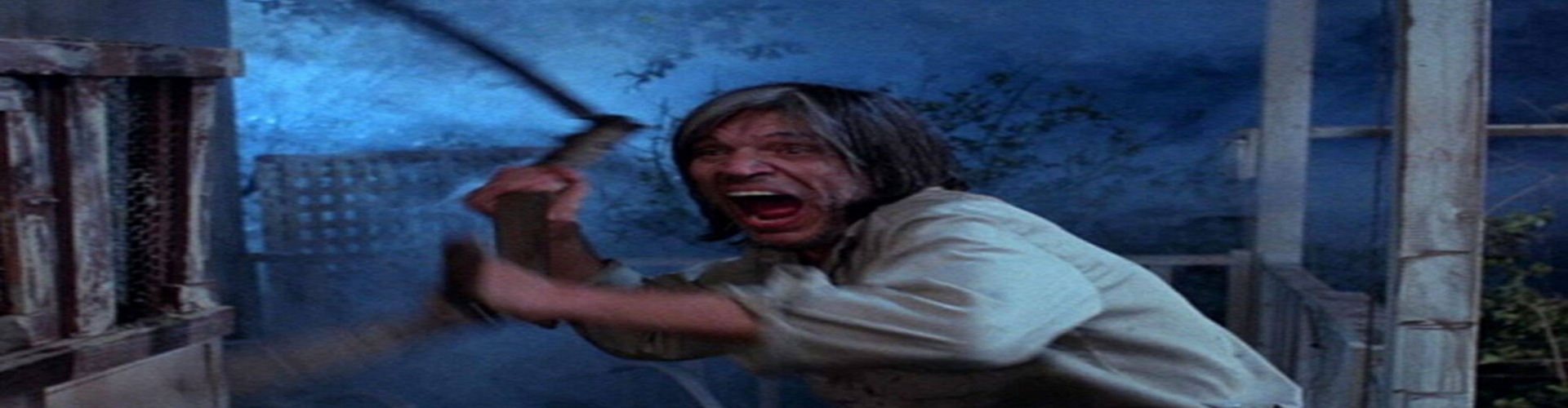
| The Love Butcher features "... powerful and harrowing depictions of misogynistic violence." |
Bizarre
and brutal murders of young and attractive housewives with the use of garden
tools have an upscale neighbourhood in a grip of terror. Shot entirely on
location in Los Angeles, California, the gross interior décor of these suburban
houses reminds us of why the 1970s was the decade taste forgot.
Local
gardener Caleb (James Lemp, credited as Erik Stern, 1938 - 2012) is a lonely,
bald, hunched over, and crippled, middle-aged simpleton. He wears overalls and
thick-lensed glasses. He performs his daily duties tending to the gardens of
female residents who verbally abuse him. At the end of his days, he returns to
his filthy little apartment, and argues with his younger brother, Lester, due
to their sibling rivalry. Caleb is delusional, though, because Lester is just a
mannequin with a wig. Caleb is not as he appears, because when he is pushed too
far, he transforms into Lester (also Lemp). He is handsome with chiselled
features, confident, charming, and psychotic. The deranged Lester personality
uses a variety of disguises and accents as crude stereotypes, to gain entry
into the women’s homes, and to seduce them. He then punishes them, as he
believes all females are evil. “Your ugliness is on the outside… theirs’ is
hidden away”, Lester tells Caleb.
The inept
police are unable to catch Caleb/Lester, despite all the women being killed
with gardening tools, and Caleb being their regular gardener. In this weak procedural investigation aspect, there is a butting of heads between the
police chief (Richard Kennedy, 1929 - 1985, Ilsa, She Wolf of the SS,
1975) and newspaper reporter, Russell (one-and-done actor Jeremiah Beecher).
Russell berates the police for their incompetence in failing to catch the
killer, but this just makes him a hypocrite, because Caleb is his girlfriend
Flo’s gardener. Flo (Kay Neer in her sole acting performance) is the only
likable female character, as she is kind to Caleb.
It is
hard to care about most of the female victims because they are such cruel
bitches. We see them ridiculing the weird, yet harmless, gimp Caleb for his
disability, so we cannot feel sympathy for them when they meet their grisly
demises at the hands of Lester. But nor can we root for him getting revenge for
the poor unfortunate Caleb. Lester is an alpha-male stud who sees himself as a
godly figure of masculinity, thinks all women should worship him, and is a
detestable misogynist. He hates ALL women. When the killer and their
victims are awful alike, how are we supposed to feel?
 |
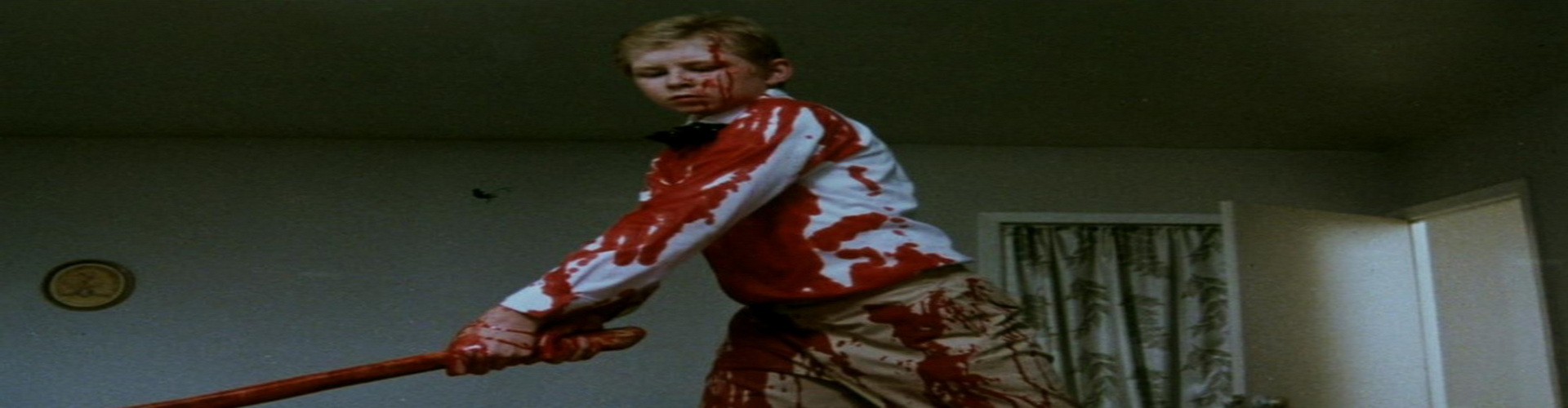
| James Lemp plays dual roles as Caleb/Lester. |
In a scene when Sheila (Robin Sherwood, Tourist Trap, 1979, Death Wish II, 1982) is swimming in her private pool, Lester
dives in with a hosepipe and attacks her. He tears off her bikini, and then
forces the hosepipe down her throat, drowning her in phallic rape symbolism.
Caleb/Lester’s origin of his madness, and hatred
of women, stems from a childhood trauma related to his mother. This is revealed
in a tragic, heart-breaking moment, in a flashback during the climatic twist.
In author Stephen Thrower’s tome, Nightmare USA: The Untold Story of the
Exploitation Independents (Fab Press, 2008), he points out an auteur thread
of “nasty mothers” in Don Jones’ work. He writes that the mother in Schoolgirls
in Chains is an “incestuous dragon”, and that the mother in The
Love Butcher guilt-trips her child by laying the blame on him with callous
words, and “... sowing the seeds of future mental illness in her son.”
In
Stephen Thrower’s interview with Don Jones in Nightmare USA, there is a
quote from The Aurum Film Encyclopedia: Horror (Aurum Press, 1984). “The
Love Butcher is interesting in that whilst its production pre-dates the stalk-
’n’ -slash craze, its ironic tongue-in-cheek script actually highlights and
parodies the gross misogyny of the sub-genre.” A long line of short-sighted
film critics has accused slasher horror of being the male fantasies of the
sexualized mutilation of women. They miss the point that the lone killers are
often unattractive and socially inept (Caleb), and they are mentally ill,
abhorrent, and their homicidal actions are never morally justified (Lester). No
male viewer in their right mind could identify with them. Films can be about
misogyny and not be misogynist.
The
slasher film inhabits the puritanical, conservative, and Christian/Catholic
world. Pre-marital sex, drugs, and alcohol are all sins, and the killers embody
this poisonous worldview. In The Love Butcher, Pat (Eve Mac, yet another
one-time performer) is the character Don Jones created. After she and Lester
have had a few beers together in her home, he seduces her. Then a bible-bashing
nuisance turns up at the door, preaching to her how her “immortal soul
is in jeopardy.” She closes the door on him, and then Lester stabs her to
death. Halloween would later codify this as a major slasher trope.
 |
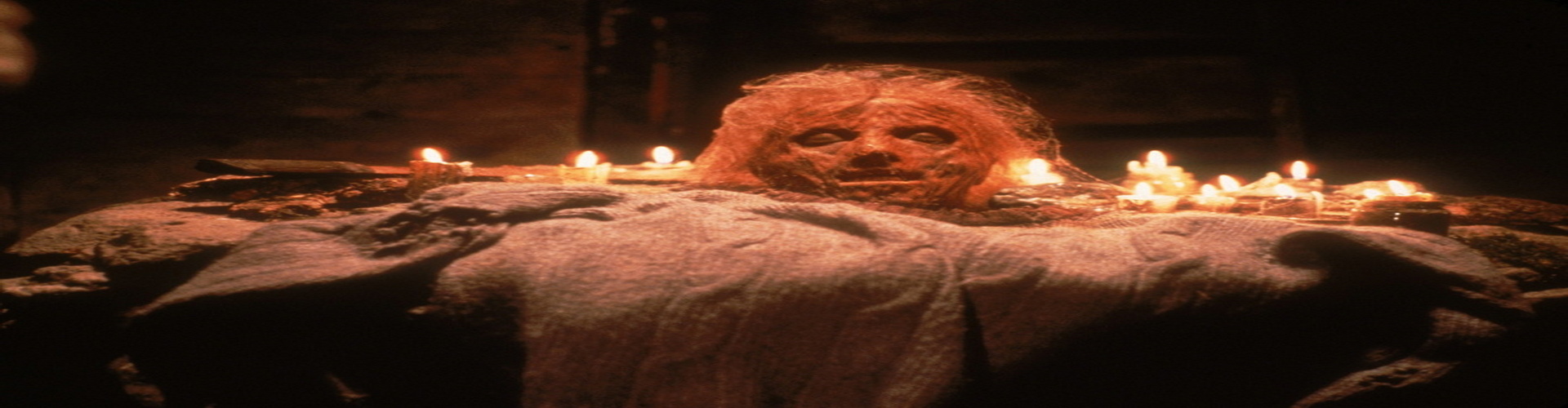
| "The most shocking murder is deliberately saved for Flo, because she is the only sympathetic female character." |
Lester
kills the warm-hearted Flo out of jealousy for being kind to Caleb. The most
shocking murder is deliberately saved for Flo, because she is the only
sympathetic female character. Used as buffers are moments of romantic
light-heartedness between Flo and Russell. This includes their plan to get
married, which makes us relate to them. Because of Russell’s determination to
catch the killer, we are fooled into thinking they are the ones who will bring
down Caleb/Lester. This comfort zone makes Flo’s nasty and unsettling death
more tragic. As Lester and Flo struggle, he tears off her clothes until she is
completely naked. He tells her, “You will leave this world as you entered
it.” As she sits on the floor and tries to cover herself with her arms, she
begs for death rather than being tortured, to which he obliges. He hacks her to
death with a serrated garden hoe, and she dies covered in blood. In the end,
Caleb must overcome Lester to put an end to his reign of terror.
James
Lemp has a lot of charisma and is full of manic energy. His performance in his
dual role is highly memorable, with his transformation from Caleb to Lester and
back being astonishingly convincing. We sympathize with the poor Caleb, but are
terrified of the menacing and merciless Lester. When the two personalities spar
with each other, it is pitch black comedy, as Lester berates Caleb for his
handicap. Lester taunts his victims with ridiculous and demented lines like, “Your
feminine pulchritude is detestable, and you were trying to drain the energy
from me!” James Lemp carries a film that would not have worked without him.
Unfortunately, due to The Love Butcher being little known, the actor
would end up playing mostly bit parts in TV shows. He landed a supporting role
in Cannon Films’ Charles Bronson action vehicle, Assassination (1987).
The Love
Butcher is a
mixed bag piece of curio exploitation with enough highlights to make it
enjoyable. Considering the unideal circumstances of its production history, it
is surprising it turned out this well. This is a testament to Don Jones’ talent
in undertaking such a salvage job. It is certainly much better than his next
trip into horror with his unsuccessful mix of supernatural and slasher in The
Forest (1982).
 |
| With charisma and manic energy, James Lemp gives a memorable performance. |
Note: Code Red’s 2015 Blu-ray release presents The Love Butcher in its original 2.35:1 aspect ratio. It features a commentary track by Don Jones, moderated by Lee Christian and film historian and hip-hop artist R.A. Thorburn a.k.a. R.A. the Rugged Man.
© 2026 Dave J. Wilson. All rights reserved.


