
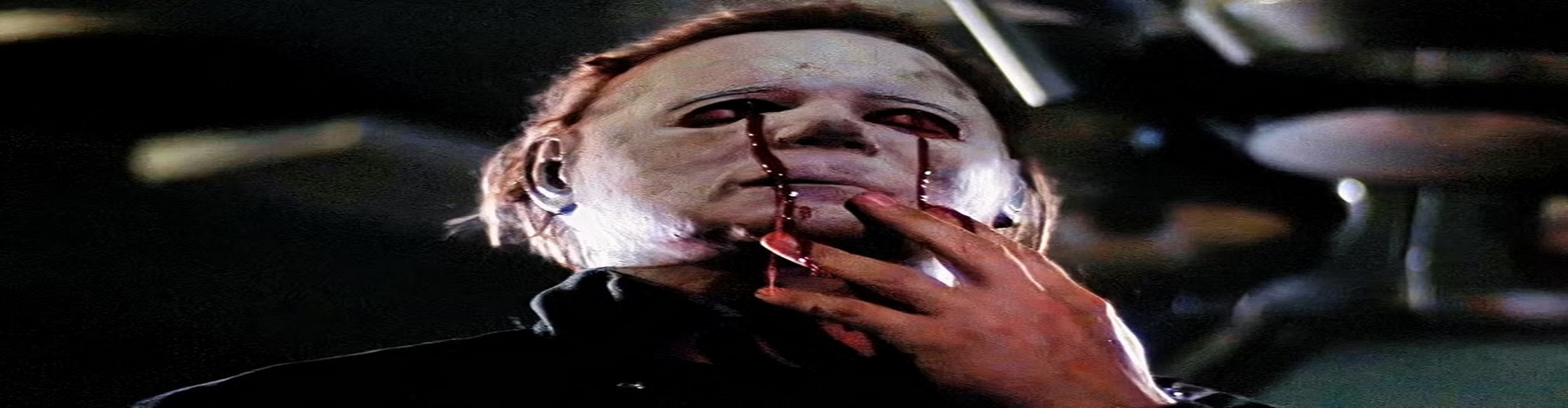
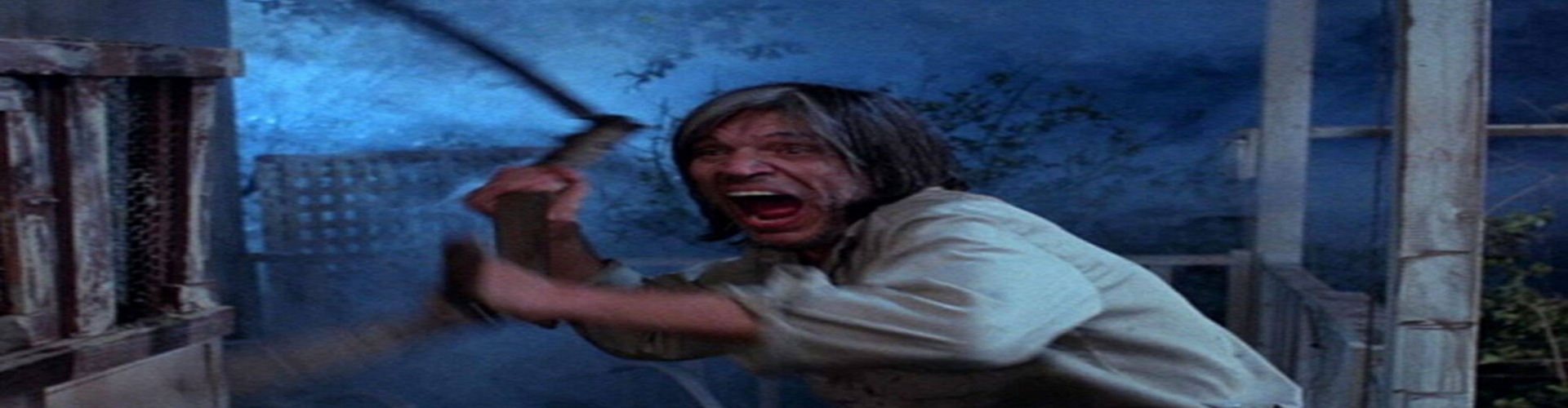
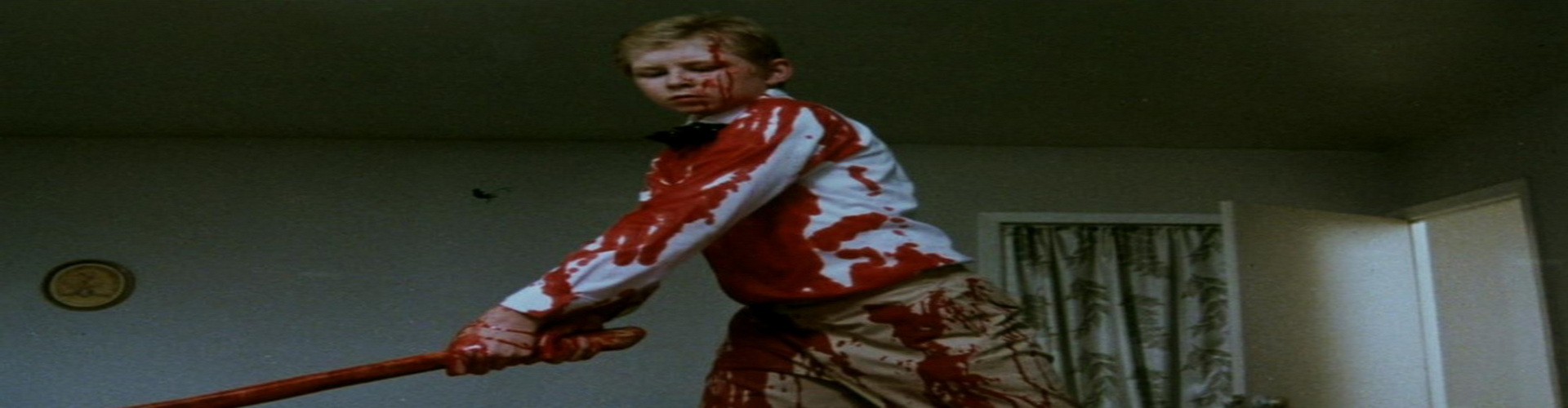
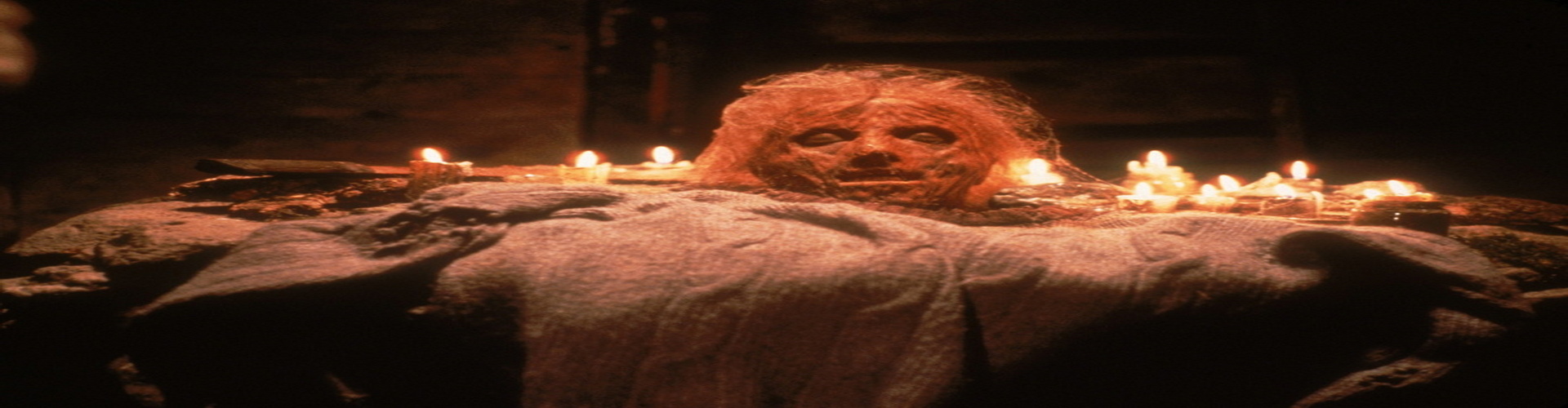
 |
| Tom Savini's gore effects for the brutal murders are the main draw of Friday the 13th. Credit: Paramount Pictures/Warner Bros. |
Spoilers and violent images are included.
It is hard to view Sean S. Cunningham’s original Friday the
13th in a vacuum, away from the franchise he unintentionally created. This is
due to its poster boy slasher villain, Jason Voorhees, and his infamous hockey
mask that has become so recognizable in the mainstream. There was a Friday the
13th released in every year of the 1980s, bar 1983 and 1987, and Jason had
become a ’80s pop culture icon. So much so that non-horror fans were aware of
him, and did not even necessarily, know the character by name. When they
thought of the genre, what would often come to mind was a hulking hockey-masked
maniac massacring scantily clad beautiful young women. Jason had become
emblematic of slasher horror, a cinematic movement Friday the 13th had opened
its blood gates to; a deluge of rip-offs of a rip-off flowed out.
Cunningham has stated that he did not aspire to make high
art, as he just wanted to make a scary good time, by exploiting the phenomenal
success of John Carpenter’s slasher template, Halloween (1978). Carpenter’s
film itself is possibly influenced by Bob Clark’s proto-slasher, Black
Christmas (1974). Paramount Pictures wanted to milk the Halloween cash cow too,
so they picked up the domestic rights to Friday the 13th for $1.5 million, and
with a $1 million advertising campaign aimed at teenagers and young adults,
they distributed wide this $550,000 exploitation picture. While the
independently released Halloween became a hit, it did so by gradually opening
in territories over the course of a year and a half, right up to the release of
Friday the 13th, which was an instant cult smash. It made a ‘killing’ at the
box office with a take of $39,754,601, and grossed another $20 million from
international distribution by Warner Bros. Then other studios started picking
up small low-budget slashers, and released these in cinemas everywhere. Friday
the 13th had kick-started the first slasher cycle.
These types of trash flicks with no star actors were usually
seen in the seedy grindhouse fleapits on 42nd Street, Manhattan, New York, and
on the drive-in movie theatre circuit across America, released by shady
distributors to make some easy money. This was the first time that a reputable
major Hollywood studio had released such a film, so general audiences could go
see it in the clean and luxurious surroundings of their local multiplexes.
Honest workers and students were going with friends and partners, amongst the
safer company of other regular folk, as opposed to the low lives of drug
dealers, junkies, pimps, prostitutes, and street thugs.
Audiences lapped up the focal selling point of the
shockingly realistic set-pieces, in which a likable bunch of teens are
gruesomely dispatched one-by-one in loving graphic detail, realized by SFX wiz
Tom Savini. Even though around half of the murders happen off-screen, we still
see the horrid aftermaths. This made for an intense visceral experience, and
added the gore factor to the slasher template. It is in stark contrast to John
Carpenter’s minimalist approach in Halloween that focused on eerie atmosphere
and taut suspense and tension, and has little bloodletting. Friday the 13th is
almost as much Savini’s film as it is Cunningham’s, as the director mostly just
points the camera at the execution of these practical special make-up effects
creations. But he does pull off some effective highlights, with well-paced,
suspenseful and tense, and genuinely creepy sequences that deserve more credit
than they are given.
Screenwriter Victor Miller (1940 - 2026) creates an
unsettling atmosphere with moments of quietness, both compressed and expanded,
in a deliberately paced slasher piece that demands our patience. Aside from
setting up the premise and the lore, and throwing in a red herring, the first
act is almost plotless. It mostly plays out like a slice of teenage life in the
woods, as we get to know and like this small group of characters. It generates
our fears for them due to the horror we witnessed in the opening, and the
horror returns when their bodies start piling up from the beginning of the
second act. Even then, the killer commits their murders on the quiet, because
they stalk the teens unbeknownst to them, so they do not get the chance to
defend themselves.
Composer Harry Manfredini’s main theme greatly resembles the striking strings ensemble of Bernard Herrmann’s composition for Alfred Hitchcock’s granddaddy slasher forerunner, Psycho (1960). Manfredini’s motif cue sting alerts us to when the mystery killer is on screen, together with cinematographer Barry Abrams’ point-of-view shots.
 |
| The pre-title sequence features the first use of POV to tell us that the killer is on screen. Credit: Paramount Pictures/Warner Bros. |
The cold open in the period setting of 1958 establishes the summer camp location in the fictional rural town Crystal Lake. It sets the grisly tone, as it features the obligatory first stalk and slash set-piece to whet our appetites, with the double murder of a young couple of camp counsellors that were getting it on. We see the first use of the first-person perspective of the psychotic killer, used to evoke a sense of voyeurism. The technique was innovated by Michael Powell (1905 - 1990) in his cult classic psychological horror, Peeping Tom (1960). This prologue tells us that sex = death, just as the opening of Halloween, when we see through the POV of the six-year-old Michael Myers, him repeatedly stabbing his older sister Judith to death, after she just had sex with her boyfriend. Both sequences serve as the backstories of the present day events.
After the title sequence, the narrative time jumps to Friday 13th June 1979 (the year the film was made). We meet hitchhiking cook, Annie (Robbi Morgan). She gets a ride from local truck driver Enos (Rex Everhart, 1929 - 2000) halfway to the reopening Camp Crystal Lake, which the locals have nicknamed “Camp Blood”. Walking to the truck, they cross paths with prophet of doom, Crazy Ralph (Walt Gorney, 1912 - 2004), who exclaims about the camp, “It’s got a death curse!” This town drunk is a red herring, and foreshadows the horror instore, codifying the slasher trope of the doomsayer from the older generation warning the younger generation of their impending tragic fates. He has memorable lines like, “I’m the messenger of God. You’re doomed if you stay here.” Keep this in mind.
Enos also warns Annie that Camp Crystal Lake is jinxed, and feeds us exposition. He tells her about a series of tragic incidents out of chronological order: a couple of camp counsellors were murdered in 1958; a boy drowned in 1957; a bunch of fires happened, but does not specify the date; and when they tried to reopen in 1962 the water was bad. Enos mentions the most important event between two of the events it triggered - the murders and the fires - so it is not on our minds over the course of the proceedings.
Screenwriter Miller has ticked a box for a whodunit. Taking place in a small countryside town, the history of these crimes has more of an effect on its residents, sending ripples through the community, which relates the backstory to the young outsiders. As the perpetrator was never caught, it has dire consequences for them, because they are staying in the same location where the crimes were committed.
 |
| The lovable town drunk, Crazy Ralph (Walt Gorney), establishes the doomsayer slasher trope. Credit: Paramount Pictures/Warner Bros. |
Then we are introduced to the
rest of the camp counsellors. Driving to the camp are lovers Jack (a post-National
Lampoon's Animal House Kevin Bacon) and Marcie (Jeannine Taylor), and
their third wheel jokester friend, Ned (Mark Nelson), a character type that
will become archetypical in the slasher sub-genre. When they arrive, they meet:
owner Steve Christy (Peter Brouwer), who has been fixing up the place for its
reopening; final girl Alice (Adrienne King), who is an art major; Bill
(Harry Crosby, son of Bing), who is Alice’s love interest; and Brenda
(Laurie Bartram, 1958 - 2007), who is an animal lover. Victor Miller created
these characters for the youth of the day in mind to identify with. Despite the
one-dimensional characterisations of these teenagers, they are portrayed as
well-meaning, fun loving, and carefree, so we care about them. We value them as
sympathetic victims purely of circumstance, when their lives are tragically cut
short in the most brutal and callous of ways. A clear distinction between the
annoyingly obnoxious kids that would populate slasher cinema.
Victor Miller has placed the teens in a remote location away from adult supervision to be systematically murdered like lambs to the slaughter. They are stuck in an outlying backcountry area, during a heavy thunderstorm at night, with electricity out, telephone lines cut, and all means of transportation off limits, while they are oblivious to someone stalking them, and we are the only ones let in on this. It is a simple yet terrifying concept. Camp Crystal Lake popularized the slasher’s exploited settings of summer camps and other isolated environments - the backwoods in general, amusement parks, college dorms, etc. Places we can easily find ourselves in, and so it provides a real sense of dread and potential doom. Mario Bava’s 1971 giallo/slasher prototype, Reazione a Catena/Chain Reaction (A Bay of Blood, Twitch of the Death Nerve), was the first to do this, taking place at a secluded bay side mansion.
Steve drives out of the camp in a green SUV to go to town for supplies. Straight after, a same colour SUV picks up Annie. The roof is down, whereas the roof of Steve’s was up, and the colour of the license plate on the back is blue, whereas on Steve’s it was yellow. Once Annie is in the passenger’s seat, we see her from the driver’s POV, as she tells them she will be the cook at the reopening Camp Crystal Lake. The driver then speeds up, goes right past the road to go to the camp, and Manfredini’s pounding score plays. There is then the first of two chase sequences - the only instances in which the victims know they are being stalked. The vehicles’ similarities will play a crucial part in the finale, because Alice saw Steve leave the camp in the SUV.
On another note, for future reference, when we see the killer’s legs as they are chasing Annie, they are clearly a man’s legs.
 |
| Poor Annie (Robbi Morgan) gets it in the woods. Credit: Paramount Pictures/Warner Bros. |
Crazy Ralph sneaks in to the camp and warns the group, a
sign of their imminent deaths. Soon later, Ned follows the killer into a cabin.
Just as a thunderstorm is about to hit, Marcie tells Jack she has been scared
of storms since she was a child, and describes her recurring nightmare, “… the
rain turns to blood, and the blood washes away in little rivers.” As it starts
to pour, so begins, A Long Night at Camp Blood, which was the tentative title
of the script. The second act of the film is when it comes alive.
As Jack and Marcie are making love, on the bottom of a bunk
bed in the same cabin Ned followed the killer into, the camera pans up to the
top bunk and Ned’s throat slit corpse, and then there is a close-up of Marcie’s
face as she climaxes. She then leaves to use the bathroom. As Jack lies on the
bed smoking a cigarette, a drop of Ned’s blood falls on his face, and then,
suddenly, from beneath the bed, a right hand (of a man) grabs his forehead, and
their other hand rams an arrow through the mattress and into the back of his
neck, piercing through, and blood spurts all over his chest. The slasher film’s
intrinsically linked sex and death has never been so explicit. As Jack and
Marcie are having sex, the dead body of their friend is laid out above them,
and the killer is underneath them.
Despite our anticipatory anxiety for the inevitable, we are still shocked by the viciousness of Marcie’s murder, because, obviously, we did not know how it would play out. In an “Oh, shit!” moment, we see behind her on a wall in the bathroom, a silhouette of an axe being raised. She then turns around to see it held high, lets out a loud scream, then we see it come down, and a hanging light shade that swings wildly when the axe makes contact with it. We see the axe buried in the left side of her once pretty, destroyed face, as she falls back, and slides down a shower curtain and out of frame. The axe hitting the light shade makes for a nice touch in the execution, as it bridges the driving of it into Marcie’s skull, and when the camera returns to the swinging light shade for the last shot of the scene, it makes for haunting imagery.
 |
| Once so Pretty. The destroyed face of Marcie (Jeannie Taylor). Credit: Paramount Pictures/Warner Bros. |
Off-screen kills are never popular with slasher/horror
fandom, and this sequence is never talked about, but it is well staged and
executed. When Brenda is in her cabin lying on a bed reading a book, she hears
the ghostly sound of a young boy’s voice crying out for help from the darkness
outside. This is the killer mimicking a child’s voice, but sounds authentically
like a child. Brenda, concerned for their safety, goes out to search for him
using a torch, and only wearing a nightgown. The boy can still be heard in the
thick of the thunderstorm, until his voice suddenly stops when Brenda finds
herself at an archery range where the killer has lured her to, and they put on
the lights that blind her as she stands in front of a target. Soon after the
lights have come on, the film cuts to the exterior of the cabin Alice and Bill
are in, and we hear Brenda let out a deafening scream. Earlier, we saw Brenda
putting up the archery range, and when she finished positioning one of the
targets, Ned, messing around, used a bow to shoot an arrow into the target
while she was standing right next to it. Due to this foreshadowing, we get an
idea of how she is killed. A child’s voice calling for help to a young woman
alone at a remote location, in the pitch-blackness of night, during a heavy
thunderstorm, then those blinding lights, and her death scream, are chilling
imagery and sounds. This moment stayed with me after my first viewing of the
film.
Bill delivers the immortal line in slasher cinema - “I’ll be right back”, and so we know he will not be. When Alice discovers him dead, we get a close-up money shot of his bloodied carcass pinned to a cabin’s door with arrows, and his throat is slit.
This brings us to the finale. Alice is holed up in a cabin,
and the killer terrorizes her by throwing Brenda’s body through a window she is
standing by. Alice then sees the headlights of a vehicle pull up, and seeing a
SUV, she mistakes it for Steve’s, unaware that he has been murdered, so she
rushes out, and is met by a woman we are seeing for the first time. Set up in
the first act, this is how Alice comes face to face with the killer, and is now
more vulnerable without the protection of the cabin.
 |
| Chilling imagery and sounds can be seen and heard in this never talked about sequence. Credit: Paramount Pictures/Warner Bros. |
We could clearly see that the killer’s hands and legs were a man’s, but now we are presented with a stocky middle-aged woman with a butch haircut. Whom are the filmmakers kidding with this cack-handed gender swap reveal?
The woman tells Alice that her name is Mrs. Voorhees (Betsy Palmer, 1926 - 2015). After she feigns innocence over Brenda, she tells Alice about the boy who drowned in 1957. The negligence of the camp counsellors because they were having sex, caused her unsupervised young son named Jason to drown, when trying to swim in the lake by the campgrounds where she worked as a cook. She tells Alice that after what happened that she could not let them open the camp again. She tells her that today is her son’s birthday, falling on the superstitiously unlucky 'Friday the 13th'. This started the trope of the slasher villain revealing themselves and their motive to their last intended victim. Mrs. Voorhees is delusional in her belief that she is saving other children from the tragedy that befell her son by murdering innocent people to make sure the camp stays closed. Half of her is a sympathetic grieving mother; the other is a deranged vengeful murderess. This is elevated by the brilliant manic energy of Betsy Palmer, who is the most experienced actor here, and easily the best.
Harry Manfredini’s sound effect of “ki ki ki, ma ma ma” represents Mrs. Voorhees’ psychosis of schizophrenia, as she has auditory hallucinations of her deceased son Jason telling her, “Kill her, mommy!” The “ki” comes from “kill”, and the “ma” comes from “mommy”. This is a role reversal of Psycho - the mother is alive, and the son is dead.
We did not get to meet Mrs. Voorhees from the outset, as a seemingly good person nobody suspects. It is a cop out in a mystery film when a character introduced for the last 20 minutes, reveals they are the killer and their motivation to the survivor, within their first two minutes of screen time. This is horribly lazy writing that insults our intelligence.
 |
| "[Friday the 13th] started the trope of the slasher villain revealing themselves and their motive to their last intended victim." Credit: Paramount Pictures/Warner Bros. |
Friday the 13th solidifies the entwining of sex and
death/the sin met with punishment implied in Halloween. Victor Miller makes it
unequivocal by giving Mrs. Voorhees the urgency of sex = death that propels her
vengeful murderous rampage on the horny young camp counsellors. The slasher
film inhabits the puritanical, conservative, and Christian/Catholic world, as
the killers represent their abhorrent views on pre-marital sex in a morbid
moral lesson. In Friday the 13th, the warnings from Crazy Ralph - ‘the
messenger of God’ - carry the underlying ominous threat that the teenagers’
so-called misdeeds will not go unpunished. The female victims in slashers are
not usually promiscuous, as they are in normal, healthy, and monogamous
relationships, but because the sex is pre-marital, they are nothing but sluts
in the church’s narrow-mindedness. Alice is the quintessential final girl: she
is not sexually active (possibly a virgin), sensible, resourceful, and survives
when confronting the killer. While the final girl is morally upright, because
of her intelligence she is able to think critically, and can decide what she
wants to do, unlike the followers of blind faith. When the final girl
dispatches the killer who embodies this poisonous worldview, she vanquishes it.
The other chase sequence leads to the final showdown that
takes place by the lake. It results in Alice decapitating Mrs. Voorhees with
the machete she used to attack Alice with, which is captured in all its gory
glory in slow motion.
We then hear Manfredini’s tranquil closing theme, but this reassurance is false. An exhausted and traumatized Alice boards a canoe, takes it out on the lake, and falls asleep. In the morning, the police turn up, they shout to her, and she wakes up and looks up. As the calming music still plays, the camera slowly and suggestively zooms in to the right of Alice, in the seemingly safe surroundings of the stillness of the lake. Then suddenly, we see the horrifying imagery of the decomposed and hideously deformed boy, Jason, rise from the lake, and pull Alice under the water in revenge on her for killing his mother. Alice then wakes up screaming in a hospital bed. I first saw Friday the 13th growing up in the 1990s, when I got my parents to rent it for me on an old dirty worn out VHS tape from our local video store. Despite the suggestive camera movement in this scene, I was still horror-struck by what happened, because up to this point, the film was grounded in reality, with not one hint of a supernatural element. Then it turns out to be a Carrie-esque nightmare sequence. This is one of the most finely crafted final jump scares in cinematic horror history, and is one of my most vivid memories of my misspent youth watching movies.
In the hospital, Alice asks the present police officer about Jason, and he tells her they did not find a boy, to which Alice replies, “Then he’s still there.” She turns her head facing the camera, as we hear the return of the end theme, which now takes on a more poignant meaning, when the picture transitions to Crystal Lake, and the camera slowly zooms in on ripples in the water. If we can view the film as a singular work, there is heartbreaking melancholic beauty in this final shot. Half-way through the third act, it became the tragic story of a broken woman. She went insane when her world collapsed from losing her only child, a mentally challenged hydrocephalic boy, who she struggled to raise, but loved unconditionally. When he drowned, his body was never recovered from the lake, and so it did not give his mother closure. Jason is a dead child used as a plot device. He is the catalyst to the present day events, existing only in referential dialogue, flashbacks, and a dream scene. In this context, it is something more psychologically disturbing. The story was never supposed to be expanded.
 |
| One of the most finely crafted final jump scares in cinematic horror history. Credit: Paramount Pictures/Warner Bros. |
The original Friday the 13th is a genre landmark for three reasons: it was an anomaly, because it was something the masses had never seen; it ignited the slasher boom; and it started a franchise that would give us one of the most iconic horror villains. The film is a collection of some of slasher cinema’s most memorable moments realized by: Sean S. Cunningham’s workmanlike direction, Tom Savini’s convincing gross out SFX, Victor Miller’s serviceable to their single mindedness but flawed screenplay, and Harry Manfredini’s terrorizer soundtrack. It is nowhere near the masterclass filmmaking of Halloween, nor as well made, or as entertaining, as other slashers released later, including some of its own sequels, but is better than other entries in or out of the series that scraped the barrel. It does exactly what it says on the tin, as a grimy exercise in a sustained night of terror, encapsulated in a perpetual atmosphere of dread and isolation. “They were warned… They are doomed… And on Friday the 13th, nothing will save them.
© 2026 Dave J. Wilson. All rights reserved.


